Bio
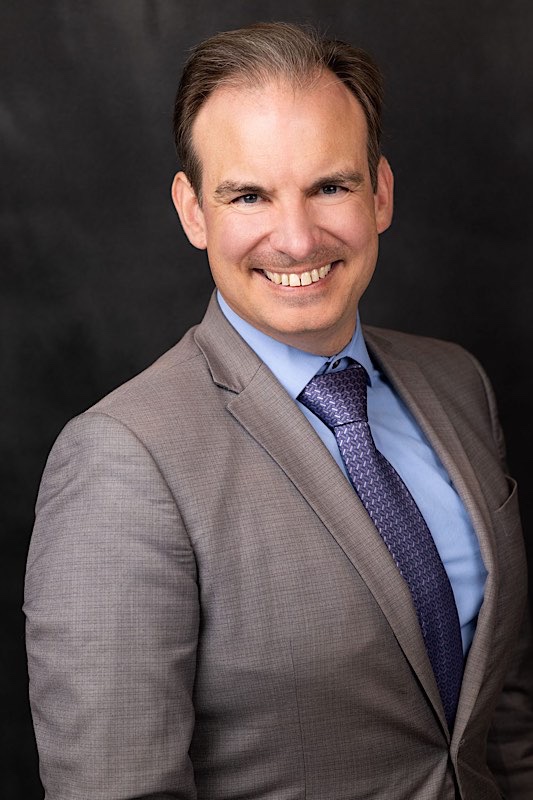
Stephen Sekula is a Professor of Physics at Queen’s University and Research Group Manager in the Research Division at SNOLAB, both located in Ontario, Canada. He is also Adjunct Professor in the School of Natural Sciences at Laurentian University.
His current focus is on supporting and enhancing the Research Group at SNOLAB and finding ways to work across the laboratory to do the same for its User Community. When he is not engaged in those activities, he conducts some research in astroparticle physics (the use of subatomic particles to study the largest structures in the universe) on a few experiments, with a common theme of using these experiments to detect “early warning” neutrinos from the next galactic supernova.
He serves as co-spokesperson of the HALO Collaboration. HALO is a sensitive neutrino detector designed to provide early alerts for galactic supernovas, which are supposed to occur 2-3 times per century. It has been over 100 years since the last such explosion, so the Milky Way seems “overdue”.
He is active in the PICO Collaboration, nEXO Collaboration, and recently joined the XLZD Collaboration. PICO is a liquid-based dark matter detector designed to push the boundaries of sensitivity to direct searches for dark matter’s constituents. nEXO is a design for a next-generation liquid xenon detector with high sensitivity to an ultra-rare nuclear decay involving the emission of two neutrinos and no other particles. XLZD is a concept for a third-generation liquid xenon particle observatory, primarily focused on dark matter searches but with capability for a wide range of physics, including supernova detection and ultra-rare nuclear processes. He is supporting or developing capabilities for purified materials, including cryogenic distillation and the creation of science-grade metals such as copper and nickel.
Prior to August 2022, he was a Professor of Experimental Particle Physics at Southern Methodist University. He was a collaborator on the BaBar, ATLAS, and Electron-Ion Collider programs, where he contributed to a range of measurements and projects. His concentration had been on the measurement of rare phenomena involving or using bottom and charm quarks, the second- and third-heaviest quark in the universe.
He is an author of multiple non-fiction books on physics, including “The Dark Matter Discoverers Handbook” (co-authored with Jodi Cooley), “The Friendly Physics Guide to Nuclear and Particle Physics in Modern Medicine”, and “Reality in the Shadows (or) What the Heck’s the Higgs?” (co-authored with Jim Gates and Frank Blitzer).
Awards and Honors
- Breakthrough Prize in Fundamental Physics, Co-Laureate (2025)
- SMU Altshuler Distinguished Teaching Professor (2017)
- HOPE (Honoring Our Professors’ Excellence) Professor of the Year (2016)
- SMU Rotunda Outstanding Professor Award (2015)
- Chi Omega Professor of the Month Award, Iota Alpha Chapter of the Chi Omega Sorority (2015)
- SMU Golden Mustang Award, which is ” . . . given each year to a junior, tenure-track faculty member, whose teaching is consistently excellent; whose courses reflect thoughtful curricular development; and whose scholarship makes a meaningful contribution to the discipline and to student learning.” (2012)
- Bausch and Lomb Award (1994)